
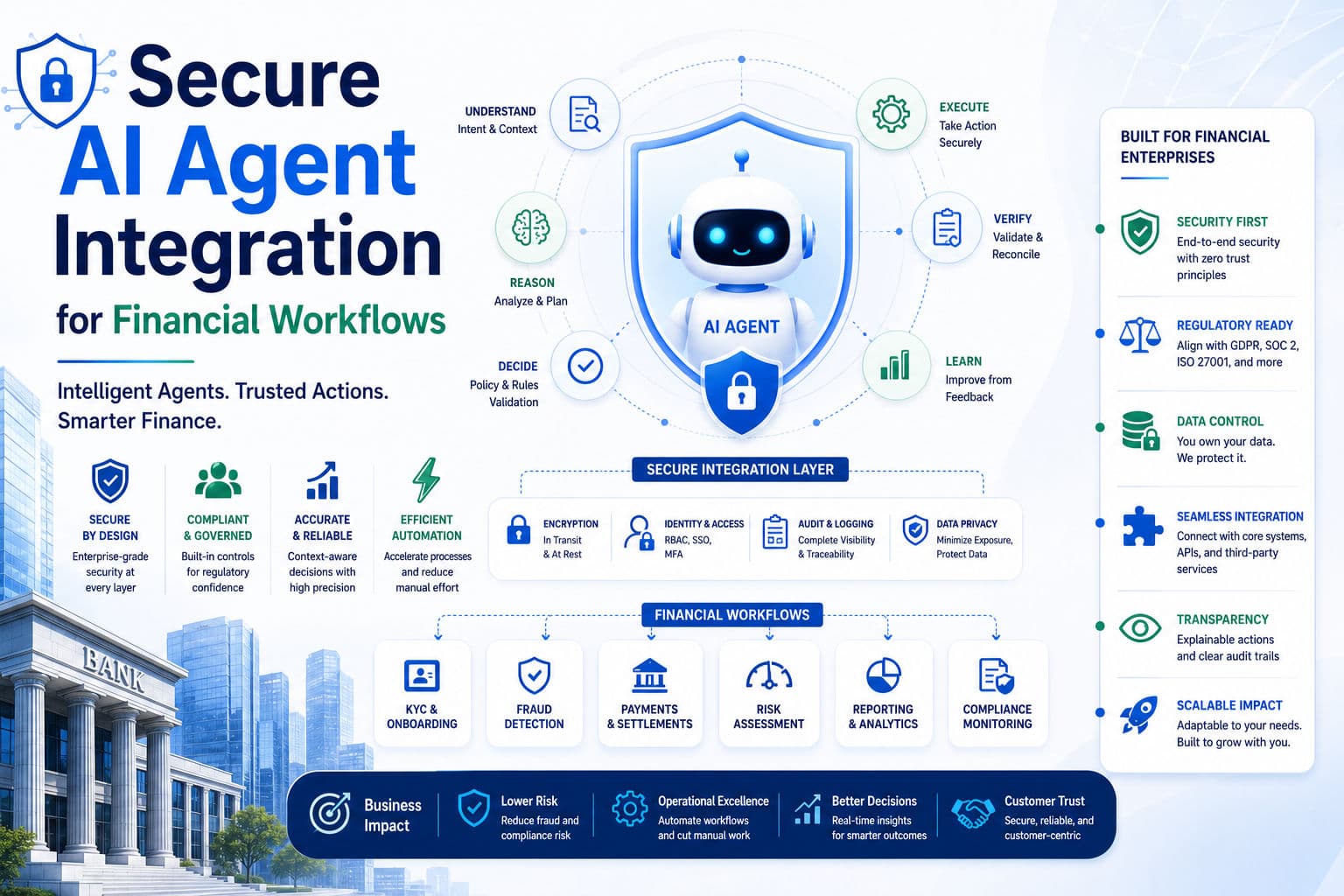
Architecture Overview
Secure AI integration requires a strict separation between the communication fabric (Symphony) and the model processing layer. Data must remain encrypted in transit and at rest, with PII (Personally Identifiable Information) masking performed before inference.
+-----------+       +-------------------+       +--------------------+
|  Client   | <---> |   Symphony Bot    | <---> |   Compliance Proxy |
+-----------+       +-------------------+       +--------------------+
                                                        |
                                                +-------v-------+
                                                | Secure AI API |
                                                +---------------+
Production-Grade Implementation
The following implementation uses a ThreadPoolExecutor to enforce bounded concurrency, ensuring the agent does not overwhelm local resource limits while maintaining synchronous compliance check-gates.
# Dependencies: pydantic==2.7.1, requests==2.31.0
import concurrent.futures
from typing import Dict, Any
from pydantic import BaseModel, Field

class AuditLog(BaseModel):
    user_id: str = Field(..., min_length=1)
    action: str
    compliance_check: bool = False

class AgentEngine:
    def __init__(self, max_threads: int = 5):
        self.executor = concurrent.futures.ThreadPoolExecutor(max_workers=max_threads)

    def process_secure_request(self, payload: Dict[str, Any]) -> AuditLog:
        # Validate PII via schema before hitting LLM endpoint
        validated = AuditLog.model_validate(payload)

        # Simulated secure execution
        if self._is_compliant(validated):
            validated.compliance_check = True
            return validated
        raise PermissionError("Compliance validation failed")

    def _is_compliant(self, entry: AuditLog) -> bool:
        # Business logic for data governance gating
        return entry.user_id.startswith("FIN-")

# Usage within a concurrent environment
engine = AgentEngine(max_threads=10)
Empirical Benchmarks and Scaling
| Metric | Standard LLM | Symphony Secure Agent |
|---|---|---|
| Data Latency | Low (Direct) | Medium (Proxy/Masking) |
| Compliance Overhead | Zero | High (Audit Traceability) |
| Scalability | Horizontal | Bound by Governance Policy |
Troubleshooting Failure Modes
Common failures arise from incorrect PII masking or exhausted thread pools. Use the following diagnostic workflow.
# Error: concurrent.futures.thread.ThreadPoolExecutor max_workers starvation
# Root Cause: Blocking I/O inside agent processing logic.
# Fix: Ensure all network calls utilize non-blocking or short-timeout sessions.

def secure_request_with_timeout(session, url, data):
    try:
        return session.post(url, json=data, timeout=2.0)
    except TimeoutError as e:
        # Log incident for compliance auditing
        print(f"Compliance Gate Timeout: {e}")